Dr. Stefan Dalton
Clinical Neuroscientist

Centre for Cognitive and Clinical Neuroscience
Brunel University of London
I’m a clinical neuroscientist fascinated by how our minds and brains navigate the hidden emotions that affect us before we are even aware of it. My research combines behavioural science and neuroimaging to develop new diagnostic assessments and treatments for mental health disorders, research which has been published in renowned international journals and has even led me to propose a new theory of treatment. I also believe science should be available beyond research. Through my blog Grounded I translate principles in psychology and neuroscience into clear, practical ideas for everyday life. I’m open to interviews, media features, and social media collaborations that help bring evidence-based mental health insights to the public.

Research Projects

Peer-reviewed Publications
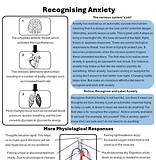
Cognitive Behavioural Therapy

Grounded
Blog

Research
Research projects
My research spans clinical psychology, neuroscience, and cognitive behavioural therapy. All driven by one question: Why do our minds often respond to emotions before we are consciously aware of it and can can we use this to our advantage in treatment?
I’m particularly fascinated by consciousness and the implicit regulation of emotion, the fast, automatic, and unconscious processes that influence mood, anxiety, and decision‑making long before we consciously 'think'. These hidden emotional habits play a powerful role in the onset and maintenance of psychiatric disorders, and I believe understanding them is the key to developing the next generation of psychological treatments.
During my PhD, I explored how implicit emotion regulation operates, not just in behaviour, but in the brain itself. This work combined neuroimaging, experimental design, and meta‑analysis, and ultimately led me to propose a new theory of how CBT works at both conscious and automatic levels. That theory is now starting to shape CBT treatment.
Ultimately, my work bridges research and practice using advanced methods to study how the brain regulates emotion, how habits form, and how psychological treatment changes the brain. I've also developed new treatments targeting implicit emotion processes to improve mood.
I’ve published translational findings in top tier international journals, won several awards, and continue to push for therapies that are more scientific, personalised, and grounded in real mechanisms of change.
Beyond the lab, I’m committed to making research useful and I regularly present at conferences, and share insights through workshops and public talks. My aim is simple: to close the gap between scientific discovery and everyday mental health practices, and help people understand the emotional processes that quietly (or not so quietly) shape their lives.

New Techniques in Psychological Treatment

Hidden Emotion Regulation

Tracking Brain Changes over Treatment
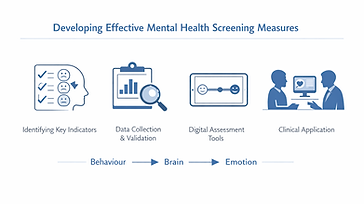
Developing New Assessment Measures
Neuroimaging Meta-Analysis
I’m captivated by the hidden neural choreography that shapes how we feel and act. Through large‑scale meta‑analyses of behavioural and MRI data, I explore how patterns in the brain reveal the mechanisms behind emotion and behaviour. This work has uncovered insights that could transform how we assess, diagnose, and treat mental health conditions, helping researchers and clinicians see not just what people experience, but why they do. My goal is to turn complex data into accessible information that improves lives.

Dalton et al., 2025

Dalton et al., 2025

Journal Articles
Open Access
My research is available in international top tier journals and highlights findings which inform the future diagnosis and treatment of mental health.

Peer-reviewed Publications
Publications
Peer-reviewed journal articles ensure the dissemination of novel scientific knowledge to the scientific community.
Neural correlates of implicit emotion regulation in mood and anxiety disorders: an fMRI meta-analytic review.
This fMRI meta-analysis examines implicit emotion regulation in mood and anxiety disorder populations compared to healthy controls. The novel findings highlight several brain regions associated with dysfunctional behaviours in clinical samples, largely highlighting altered activity in the prefrontal cortex. The findings further suggest maladaptive implicit emotion regulation should be considered a transdiagnostic characteristic of mental health, and such altered brain activity should inform the future assessment, diagnosis, and treatment of mood and anxiety disorders.
Dalton, S. D. P., Cooper, H., Jennings, B., & Cheeta, S. (2025). Neural correlates of implicit emotion regulation in mood and anxiety disorders: an fMRI meta-analytic review. Scientific Reports, 15(1), 1-17.
The empirical status of implicit emotion regulation in mood and anxiety disorders: A meta-analytic review.
This meta-analysis of clinical studies investigates implicit emotion regulation in mood and anxiety disorder populations along with healthy controls. The findings report that individuals with mood and anxiety disorders exhibit maladaptive implicit emotion regulation behaviours. As such, maladaptive implicit emotion regulation should be considered a transdiagnostic characteristic of mental health and clinical interventions should address implicit as well as explicit strategies.
Dalton, S. D. P., Cooper, H., Jennings, B., & Cheeta, S. (2025). The empirical status of implicit emotion regulation in mood and anxiety disorders: A meta-analytic review. Journal of Affective Disorders, 380, 256-269. https://doi.org/10.1016/j.jad.2025.03.118

CBT
Cognitive Behavioural Therapy
I am elected Fellow of the ACCPH and I’ve seen first‑hand how mental health shapes every part of daily life, from how we think and connect with others, to how we find meaning and behave in an increasingly complex world. I specialise in helping people navigate depression and anxiety, including disorders such as generalised anxiety, panic disorder, social anxiety, and health anxiety.
In therapy, I take a deeply collaborative, Socratic approach, helping people make sense of difficult emotions and build personalised strategies that are unique to their lives rather than a one-size-fits-all approach.
I’ve developed scientifically validated CBT programmes and a range of CBT resources, and am currently working on a book that bridges science with practical every-day life, helping readers understand not just how therapy works, but why it changes lives.
CBT
Resources
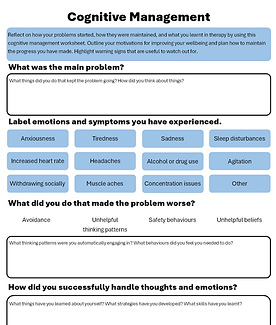
I’ve developed scientifically validated CBT programmes and a range of CBT resources, and I'm currently writing a book on new techniques in cognitive behavioural therapy.





Blog
Grounded.
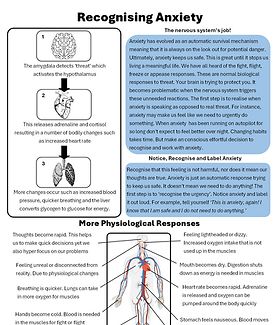
Alongside research and practice, I’m serious about making psychological science accessible. I run Grounded, a blog dedicated to translating research in mental health, psychology, and neuroscience into ideas that make sense in everyday life. Evidence‑based information explained in a way that’s engaging, practical, and easy to understand. I also collaborate with journalists, podcast hosts, and social‑media platforms to bring science to wider audiences.

My Books
CBT Techniques: A Practical Guide
This book is designed to be a companion for everyday life. A clear, practical roadmap for anyone who wants to understand their mind and change unhelpful patterns. Instead of dense theory, it translates the core ideas of CBT into tools people can actually use when they’re stuck in cycles of overthinking, caught in emotional spirals, or wrestling with habits that no longer serve them. Each chapter introduces one skill at a time, brings it to life through relatable, real‑world examples, and then guides readers step‑by‑step in putting that skill into practice. The focus is always on what works: simple, evidence‑based techniques that help people shift their thinking, regulate their emotions, and move toward the life they want. The result is an accessible, empowering guide that helps readers build psychological flexibility, resilience, and a deeper understanding of themselves — not in theory, but in the moments that matter.

Video Archive

Contact
Dr. Stefan Dalton is a clinical neuroscience researcher specialising in anxiety, depression, and the hidden emotional processes that shape mental health. His research combines behavioural science and neuroimaging and has developed new treatments in cognitive behavioural therapy and proposed new theories. He runs Grounded, a blog translating psychological and neuroscientific research into practical ideas for everyday life. Dr. Dalton collaborates with journalists, podcast hosts, and social‑media platforms, and is available for interviews, expert commentary, and research collaborations focused on mental health and AI.

Dr. Stefan D. P. Dalton
Brunel University London
Kingston Lane
London, UB8 3PH


